
As I wrap up my first trip to Japan, I think it’s only right to put pen to paper (or fingers to keyboard) about this amazing and resilient country. First trip, yes — but by God’s grace, not the last.
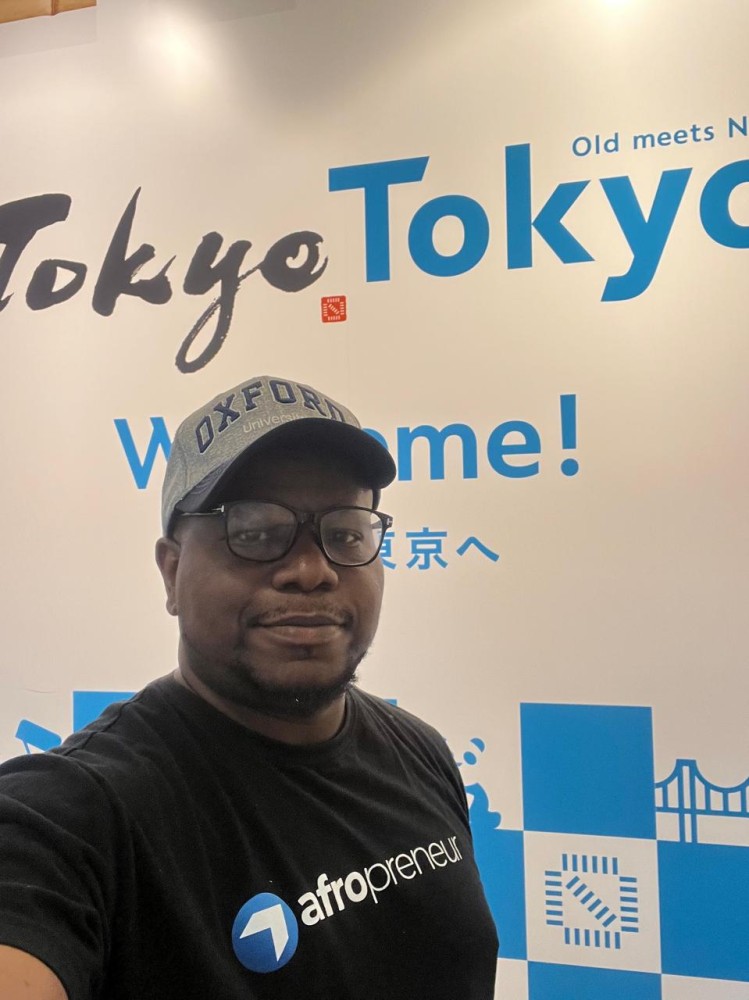
Now, while many assume I came here solely to chase Amala or play honorary “booth guard” for Nigeria, the reality was a little deeper. This journey was about immersing myself in Japan, meeting its people, and building long-term bridges between entrepreneurs, founders, corporates, and investors here and in Africa.
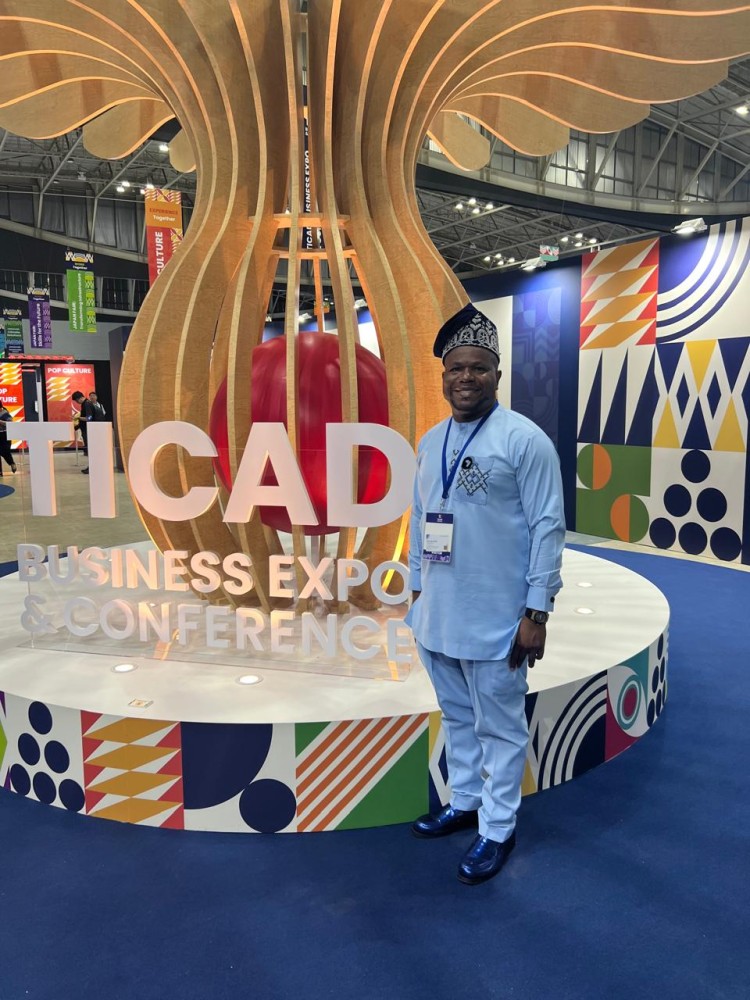
That said, I did manage to discover Amala in Tokyo (one small swallow of Amala, one giant leap for mankind!) and also served briefly as the ‘Honorary Consul’ of the Nigerian TICAD booth. But this piece isn’t just about that.
Business (and Panels) Before Pleasure
My longtime friend and co-investor, Hiroto SORITA of Global Brain Corporation invited me to Japan to join their AMA Africa Market Alliance event. We had first co-invested in Chefaa in Egypt years ago, and this was a chance to reconnect and deepen collaboration.
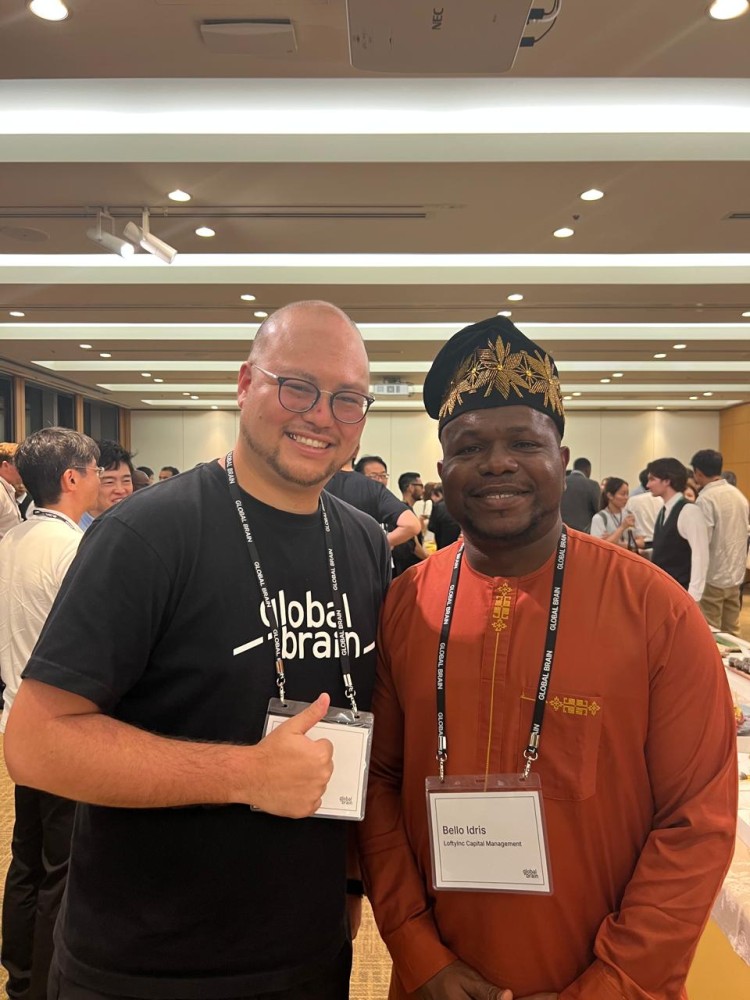
Alongside AMA, I also attended fantastic gatherings hosted by Novastar, Uncovered, Verod-Kepple (VKAV), and of course TICAD — all part of our LoftyInc Capital Japan outreach, strengthening ties between African innovation and Japanese capital.

From VC panels in Roppongi to all-day sessions on the “Japan-Africa Innovation Corridor,” I shared my usual blunt truths: if Japanese corporations want to accelerate collaboration with African companies, they must shift from being passive capital providers to strategic partners — bringing speed, risk appetite, and operational collaboration. The real magic will be in co-building with African founders, leveraging Japan’s legendary precision and global supply chains to solve Africa’s everyday challenges.

Living in the Future (Literally)
Tokyo is eight hours ahead of Lagos, sixteen ahead of San Francisco. On team calls, “tomorrow” needed clarification — theirs or mine? It often felt like I was living in the future.
I met corporations with decades-long African roots, as well as those only now warming up to Africa’s promise. Conversations were refreshingly equal — no sense of “doing us a favor.” With one in four humans projected to live in Africa by 2050, the case for Japan’s partnership in fintech, mobility, climate-tech, and beyond is undeniable.
The Softer Side of Japan
I stayed at a Mitsui hotel in Ginza — compact, functional, clean, and reasonably priced. The breakfast was great, though I had to navigate halal restrictions. Imagine ordering hot chocolate and it comes with a shot of alcohol on the side — Láàró òjó ìṣẹ́? May God shield us from temptation!
The staff were endlessly polite. They even reheated my leftover Amala and efo riro with smiles, complimenting the aroma. And the bidets? Let’s just say: you press a button, it works… warmly.
Getting around was a breeze. My hotel was near Shimbashi Station, and I relied on trains for most of my movement. The metro was cheap, spotless, punctual — and as expected, I was often the only Black man onboard. Yet, nobody stared even as I was dressed in my full Nigerian attire with cap and shoes to match. Everyone was courteous and deeply engrossed in their devices. The ritual of calmly waiting for passengers to exit before boarding was a masterclass in patience.
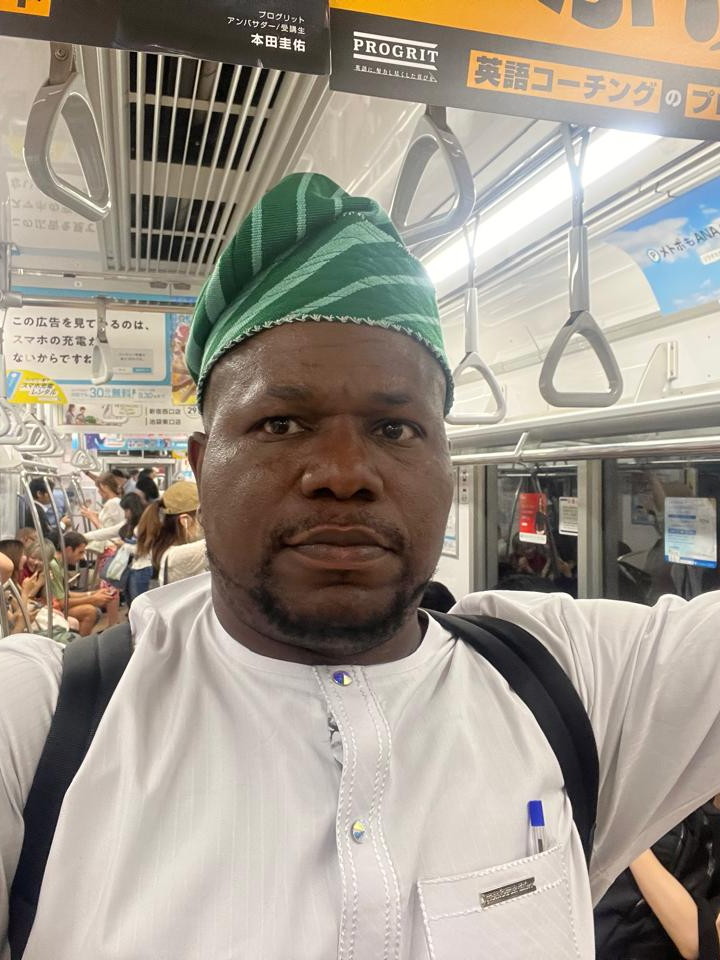
I did splurge on Uber a few times, and while luxurious, it was definitely not wallet-friendly compared to train fares.
My Abeokuta Spirit in Japan
Often, I just hopped on random trains to “see what I see.” With the help of Google Lens and ChatGPT translators, I ended up everywhere from Odawara to Hakone, Shibuya to Shinagawa — even Kamakura, where I visited the iconic Kōkōmae Station Crossing from Slam Dunk at the invitation of my good friend and long time Japanese-Nigerian investor Oluwa Satoshi Shinada. If you saw a Black man wandering aimlessly near Sakawagawa River in Shizuoka , that was me, lost in my Abeokuta-inspired curiosity.

In Yokohama, I dined at the famed Red Brick Warehouse (Akarenga Soko) and prayed at the beautiful Grand Masjid. Also, I can confirm: mosquitoes exist in Japan, and they found my blood delicious.
The bullet train (Shinkansen) was a highlight — gliding at 285 km/h with the elegance of a samurai blade. I hear the next-gen version under construction will hit 500 km/h. Imagine: Lagos to Abuja in under an hour. One can dream.
Cultural Quirks & Yoruba Déjà Vu
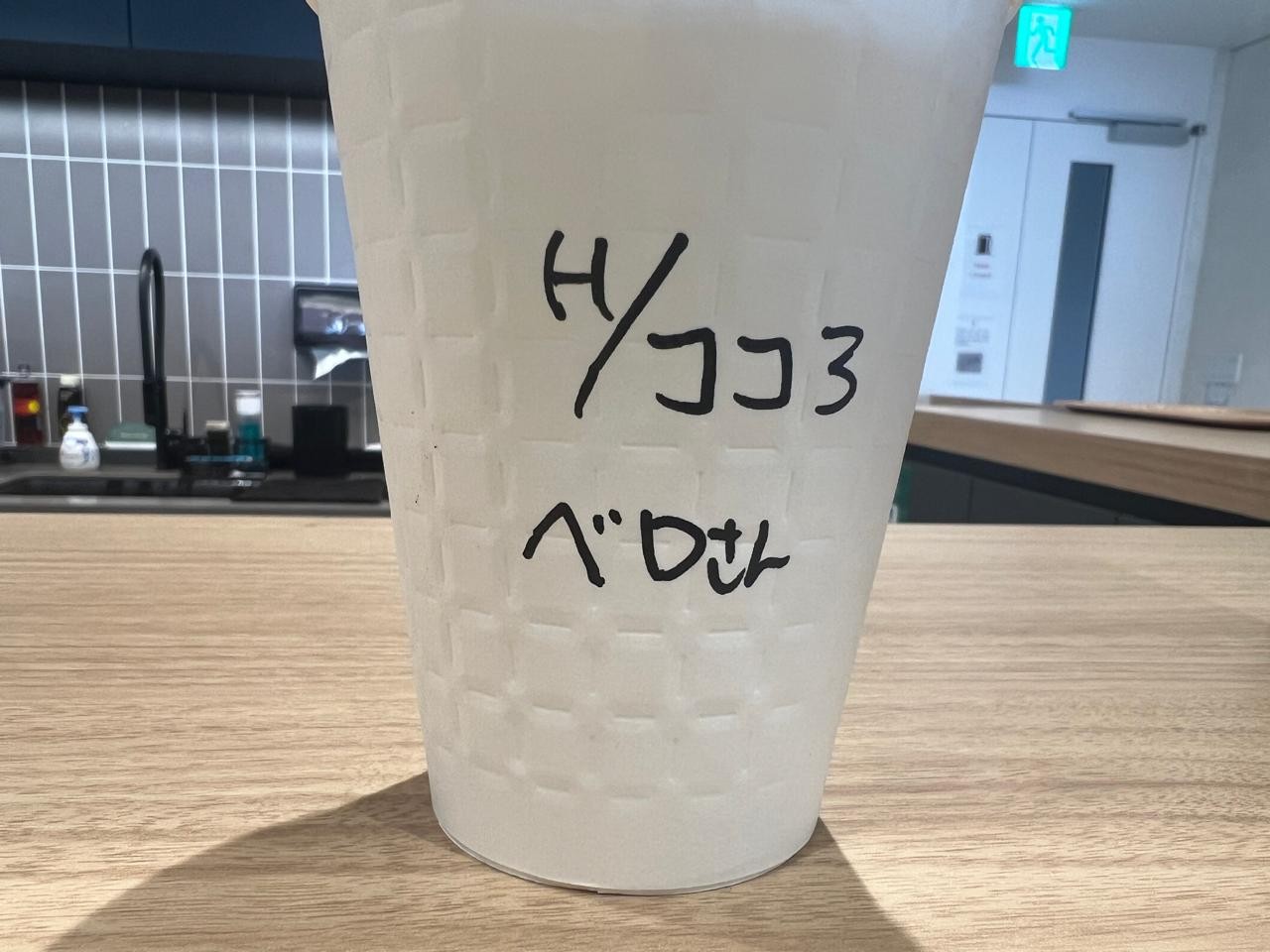
Japan’s culture felt surprisingly relatable. The bowing, the formality, the respect for elders — it all reminded me of home. I was addressed as Bello-san or Idris-san (the “-san” suffix being a sign of respect, like saying “sir”). Meeting etiquette dictated I sat facing the door, while hosts took the other side. Always, I was escorted politely to the elevator, my hosts waiting until the doors closed.
The punctuality was humbling. Trains arrived to the second, and meetings started on the dot. Trash cans were rare, yet the streets were spotless.
As a Yoruba man, I also felt eerily at home linguistically. Many Japanese words sound like Yoruba: Tanimoto, Meta, Marun, Atami, Sumitomo, Odawara. Both languages favor consonant + vowel syllables (ka, ko, mi, mo), creating accidental overlaps.
And I drank more green tea in two weeks than in my entire life — mostly tasteless, often in colorful bottles that deceptively looked like apple juice.
Faith & Familiar Faces
I prayed Jumah at Tokyo Camii, Japan’s largest mosque, built in 1938. A humbling moment: Muhammad Ali had prayed there in June 1976, just a day before his legendary fight against Antonio Inoki. Nearly 50 years later, standing in the same place was deeply moving.

From Shibuya Crossing’s chaotic scramble to Shinjuku Station’s dizzying 3.5 million daily passengers, I explored Japan’s central nervous system of transit, commerce, and culture.
Final Reflections
This journey was more than panels, bullet trains, or even Amala-in-exile. It was about planting seeds for long-term, fruitful partnerships between Japan and Africa. I leave grateful, grounded, and eager to return — and just as eager to welcome Japanese partners to our offices across Africa.

Japan, arigatō gozaimashita. Till next time.
#AfricaTech, #Japan, #VentureCapital, #Afropreneur


 The Afropreneur - Idris Ayodeji Bello
What a great piece. I have been following your career trajectory for a long time. I know you’re friends with Suraj Oyewale. Another great guy who is among the upwardly mobile youngsters.
Japan is truly a great country. A nation founded on order and discipline. Germany is its twin sister. I wish we could bring these people to govern our country well. But Japan has many environmental problems. Earthquakes, high density areas and declining birth rate.
The high speed train you mentioned has reportedly carried 10 billion passengers in 60 years with zero crash and fatalities. This is a miracle.
In conclusion, Japan has been stagnant. China is doing better than this country.
LikeLike